Friday, October 2, 2015

October Reading Workshop

October Reading Workshop

In October we will assess our students’ reading by administering a grade-level reading test.  Students will read a short text and answer multiple choice and short response questions.  These grades will be shared with parents and appear on report cards.

We will be starting our character unit where we will continue to work on the reading skills taught in September and also focus on the skill of inferring.

Inferring
Inferring is using clues in a text to figure something out.  Not all of what the author wants us to know is explicitly stated in the text, especially as we move up in reading levels.  It is up to readers to figure out some important things.  Students also need to continue to work on building their reading stamina, pushing themselves to read for longer periods of time.

We will learn to infer character traits based on the things our characters say, do and think.  We will also work on increasing our character trait vocabularies.
·      What did my character say in this scene?
·      What did my character do in this scene?
·      What was my character thinking in this scene?
o   All of these things show me that this character 
is _____________.

What parents can do to support readers at home:
·      Continue to do the things suggested in the September blog post.

·      When you see your child reading, ask them questions such as “What kind of person is your character? How do you know that?”

October Writer's Workshop


Writing Unit 2: Character Feeling Change

Focus:

         Children will be working on:
  • identifying and highlighting the main character's feeling in the beginning of the story and end of the story with details to support the feelings. They will ask themselves: what the main character said, did or thought.
  • they will identify and highlight the part of the story where the main character's feelings change and what happened to make the feelings change (what caused the feelings change)
  • they will mark up mentor text to show the structure of the essay (introduction,body paragraphs,conclusion)
  • they will discuss and mark the different feelings identifed and the supporting evidence for the feelings as well as the cause of the feelings change.


Thursday, September 17, 2015

September Read Aloud

                  Grade 3  Read Aloud 
                             

This month in Read Aloud we began the year with various short stories.
Some of the stories shared together were:


Goal:

Students are focusing on developing conversational skills that will help to scaffold deeper thinking and meaning.  They are learning how to develop pertinent skills such as:


  •  building on other students' ideas
  •  using correct whole body listening
  •  taking an active role in speaking 
  •  initiating conversation
We will be starting our first chapter book, FRINDLE the week of September 21, 2015. As we read Frindle, students will begin incorporating new skills into their conversations. 

The overarching goal is to have students understand basic story elements such as:
  •  setting 
  •  character motivation 
  •  character personality and how that affects the plot of the story
  •  identifying the problem
  •  understanding secondary characters and their role
  •  accumulating information to build meaning

We want to HEAR FROM ALL OF OUR STUDENTS!  Please encourage your child to speak and share their smart ideas with us!  Read Aloud is a fun, engaging and wonderful part of our day. 


Character Trait Words
Students will be responsible for learning and using certain conversational words relevant to each book.

Vocabulary
Students will be given several vocabulary words per book.  Quizzes will be given to assess their knowledge and understanding of the words. 

Writing Responses
One of the goals in Read Aloud is to teach students how to answer short response questions.  Each day, students will be responsible for answer specific questions which assess comprehension,the ability to make inferences and draw conclusions, as well as proper writing structure and mechanics. Please ensure that your child is beginning to restate the question that is being asked and using details from the story to support their answer. 

For example, if the question is: 

What word best describe Jack in the story?

An acceptable and complete response may look like:

A word that best describes Jack in the story is ______________.  Jack is ______________because he ____________________. For example, 


We look forward to a wonderful month of book conversations!


September Math Workshop


Unit 1- Engage NY Modules 1 & 3
Multiplication and Division


This 25-day module begins the year by building on students’ fluency of multiplication and division.

In Topic A, students initially use repeated addition to find the total from a number of equal groups.  As students notice patterns, they let go of addition sentences in favor of  multiplication facts.    Arrays become a cornerstone of the module.  Students use the language of multiplication as they understand what factors are and differentiate between the size of groups and the number of groups within a given context.  In this module, the factors 2, 3, 4, 5, and 10 provide an entry point for moving into more difficult factors in later modules.

Topic B extends the study to division.  Students understand division as an unknown factor problem and relate the meaning of unknown factors to either the number or the size of groups.  By the end of Topic B, students are aware of a fundamental connection between multiplication and division that lays the foundation for the rest of the unit.


In Topic C, students use the array model and familiar skip-counting strategies to solidify their understanding of multiplication and practice related facts of 2 and 3.   They apply their skills to word problems using drawings and equations with a symbol to find the unknown factor .  This culminates in students using arrays to model the distributive property.

Topic D continues to use skip-counting strategies and the continued use of array models are pathways for students to relate multiplication and division.  Students will learn to use tape diagrams to represent multiplication and division.  

Topic E shifts students from simple understanding to analyzing the relationship between multiplication and division.  Practice of both operations is combined, modeling the connection between them.  Skip-counting, the distributive property, arrays, number bonds, and tape diagrams are tools for both operations.

  Topic F introduces the factors 5 and 10, familiar from skip-counting in Grade 2.  Students apply the multiplication and division strategies they have used to mixed practice with all of the factors included in Module 1.  


Homework

Each night, the students will receive math homework, reflective of what we have learned in class that day. Please assist your child, as need be, and have them show you the strategies we worked on in class. In addition, we welcome any new strategies discovered by our students and we encourage them to share with the class.

How to Help at Home
  • Make flashcards of multiplication facts 
  • Check al homework and see that work is shown
  • Have children talk about what they need to do for the problem before they start the work
  • Encourage your child to verbalize and show you what we learned in math that day

September Writing Workshop

Writing Unit 1: Paragraphing
This month in Writing we will work on:

Goals:
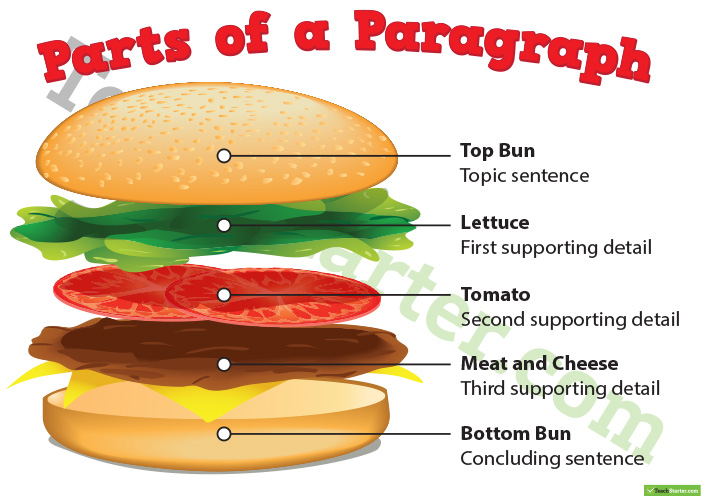
  • Students will learn to structure a paragraph with a topic sentence, supporting details and a closing sentence.
  • Students will elaborate to include supporting details, examples, description
  • Students will learn to group related information together in an organized way
  • Students will use transitional phrases to connect details within a paragraph
  • Students will improve word choice
  • Students will edit their writing

September Reading Workshop


We are currently working on our Building the World of Story reading unit.

Some of the skills we are working on are:

  • Monitoring for meaning
    • Readers realize when they are confused and use strategies to make sure they understand.  This includes knowing when you don't know a word or are confused about what is happening in the story.  
    • To successfully monitor for meaning, readers stop when they are confused.  They reread and use context clues to clear up confusion.
  • Determining importance
    • Readers figure out which parts of the story are most important and which are details.
    • Chapter titles can help students figure out which parts of a chapter are most important.  Students also think about things the author repeats or spends a lot of time on.
  • Stamina
    • A major goal of this unit is for students to build their reading stamina.  This means being able to sit down and read independently for longer periods of time.  
    • By the end of third grade, students are expected to be able to focus on their reading for 45 minutes.  This time includes writing about reading by doing assigned reading jobs.
What can parents do to support readers at home? 

  • Give your child a comfortable and well lit place to read with minimal distractions.
  • When your child is done with their reading for the day, make sure they have completed their reading job.
  • Ask your child to read to you once in a while.


*Both of these skills will continue to be worked on throughout the year as students move up in reading levels.